
The Dirty Bill
Making a clean break with the technofascist economy.

All American families play Monopoly, but each American family plays Monopoly in its own ridiculous way.
The absolute lawlessness of Monopoly is not apparent until an interloper intervenes. Monopoly then reveals itself as real estate Ouija: a battered board indecipherable to the guest but airtight in its internal logic.
“What are you doing?” the interloper cries, as you fill the Free Parking lot with fines and pocket a bill from every denomination after rolling “snake eyes.”
“I’m playing Monopoly,” I tell my husband. “This is Kendzior Sisters, not Parker Brothers!”
Growing up, my sister and I were the only Monopoly players in the house. But we were religious about it — literally. We played once a year: on Easter, in an epic battle that began at dawn and stretched to midday, by which time we had consumed all the candy in our baskets and my sister had lost all her properties to me. I savored both outcomes.
Our Monopoly set was a relic from the 1970s. It must have had a rule book at some point but my sister and I never saw it. We abandoned financial regulations during the Reagan era, just like the government did.
I don’t know when or why we made Easter our game day. But that’s true of all Monopoly rites. They grow, or mutate, until a cheat becomes a law, and a swindle a way to have more fun. Our ideas weren’t that unusual: many are used by fellow Monopoly “innovators.”
With one exception: The Dirty Bill.
* * *
The Dirty Bill is a one-dollar bill with a brown stain in the center. The stain resembles hot fudge, which means it was probably my fault, and likely originated from a Bits ‘n’ Pieces sundae from Les’ Dairy Bar. A pivotal sundae, the sundae that brought the whole façade of economic justice crashing down.
My sister was the one who discovered The Dirty Bill. She was eight, too young, really, for that level of violence. She waved it in my face.
“This is yucky,” she announced. “I don’t want it. This is a Dirty Bill.”
“You need ones for change. You have to take it.”
She swapped The Dirty Bill for a clean white bill from the bank. We kept playing as I bankrupted her in my usual style, with great glee and deliberation — until we reached an impasse.
The Dirty Bill was back.
“No!” I shrieked. “I don’t want it!”
“You have to take it! You’re the one who made it dirty.”
“Mistakes were made,” I said. “It depends on what the meaning of the word ‘dirty’ is. I’m not a crook! So, uh, let’s get rid of it.”
“You can’t throw out Monopoly money,” my sister said, neatly arranging real estate cards we had long ago lost and replaced with post-it notes. “You can’t be wasteful.”
“OK, fine,” I said. “I’ll give you Baltic Avenue if you take The Dirty Bill.”
My sister eyed The Dirty Bill and the shittiest property on the board.
“Baltic and Mediterranean.”
“You can build houses with that!” I cried. My sister had never built a house before. A dark future loomed before me, a future of fairness that left me enraged. I felt like Donald Trump. But then I looked at the Dirty Bill.
“Fine,” I muttered. My sister took The Dirty Bill and began a new life as a mogul. But there was a problem: when one of us needed change, the other would hand them The Dirty Bill.
Over the years, the Dirty Bill transformed our strategy. We prayed the bank still had tens and fives if we won second prize in a beauty contest. We happily shelled out rent if we could offload The Dirty Bill in the process.
We wanted hope and change. But we had hope and The Dirty Bill.
It was time for us children of the 1980s to face reality.
“From now on, whoever has The Dirty Bill at the end loses the entire game,” my sister announced. “No matter what. Even if you basically won. Even if you have a hotel on Broadway. You can’t win if you have The Dirty Bill!”
A new era had dawned. The Dirty Bill started in the bank. But once it was in play, the entire object of the game was to avoid it. Everything you achieved would become meaningless if it fell into your hands. All your hard work, all your careful plans — all of it meant nothing against a random assault from a rigged economy. We didn’t know it, but we had anticipated the template of our Gen X/Millennial future.
The final Dirty Bill edict was passed during The Black Jelly Bean Incident of 1992. I was thirteen that fateful spring, my sister eleven. We were watching Metallica videos and eating Easter candy. My sister decided she wanted only black jelly beans that year.
“I don’t feel so good,” my sister said, as Metallica belted out “Nothing Else Matters.”
“That’s because you have The Dirty Bill! You gonna LOSE!”
“No Sarah I’m serious, I feel really—”
And she was racing down the hall as James Hetfield roared, “Never cared for what they doooo….”
“BLECCCCHHHHHHH!”
“Never cared for what they knoooooow…”
“Sarah, help!”
I ran to the bathroom where my sister was slumped over, a mass of congealed black vomit filling the toilet. I burst out laughing.
“It’s Metallica’s black album,” I said. “In vomit form!”
“I’m going to die,” my sister said. “That means you have to take The Dirty Bill.”
“No way,” I said.
“Way,” my sister croaked feebly, in 1992-speak. “Way.”
“And nothing else matters!” James Hetfield intoned.
“Metallica wants you to have The Dirty Bill,” I said. “They said so: ‘And nothing else matters.’ You have to do what Metallica says.”
The logic of this was impeccable. My sister could not argue. We continued our game, but with a twist. Whenever someone got The Dirty Bill, we played the chorus of Metallica’s “Sad But True” to commemorate their downfall. We did it this Easter, when we played with our fifteen-year-old sons, my iPod blaring the song when, in a sad but true moment, my sister finally kicked my ass in Monopoly.
* * *
I’ve been thinking about The Dirty Bill lately. Every day I get a financial news alert that sounds like the virtual equivalent of Monopoly money: NFTs, AI coins, Polymarket, crypto. I am told to fear something called “The Tokenpocalypse.”
I don’t know what that is but I know it scares me. In 2013, I didn’t know who Elon Musk was and decided not to find out, because I already had too much on my plate. I thought Elon Musk was a type of bitcoin. I probably should have looked him up.
But there is regular Monopoly money, which now seems refreshingly tangible, and then there is Dirty Bill money. We live in the sucker punch of The Dirty Bill Economy and its arbitrary but real wreckage.
The Dirty Bill didn’t change the rules. The Dirty Bill was the rules.
The Dirty Bill is DOGE running the government. It’s AI killing your job, including the programming and writing jobs that trained the AI that killed your job. It’s Hollywood pontificating about soul-sucking AI through an SOS from HBO. It’s a smartphone going from a luxury to a convenience to a necessity whose true purpose is mass surveillance and social control. It’s rule by algorithm that beats to a dead heart. It’s a Flock camera on every corner and a Ring doorbell on every home and a frightened family on every block. It’s a million QR codes that all read “You’re fucked.”
No one asked for this, but it keeps coming.
It’s a transnational crime syndicate masquerading as a government. It’s telling people it’s a transnational crime syndicate masquerading as a government for ten years only to watch officials pretend the plot is new. It’s the Pokemon Go military-industrial complex. It’s ICE deciding that citizenship is subjective. It’s the GOP deeming an election legitimate only if they win. It’s Congress legalizing insider trading for Congress. It’s not who votes, but who counts the votes. It’s not what the law is, but who the judge is. It’s a funhouse mirror of 1000 Roy Cohns.
The Dirty Bill is the filthiest lucre: mandated counterfeit circulated in a nation of shrieking Lady Macbeths. Scream all you want; it’s content!
You know there is more to this world. You know they’d rather bombard children with digital facsimiles than let them see the real deal and force-feed them robot summaries before they find a root cause. Conditioning the youngest generation to view life this way eradicates the greatest threat to technofascism: human memory.
Memory, and its expectations.
You write on a network owned by oligarchs — pick one, any one, they’re all one — who can flick the kill switch at any time. All your work can be annihilated at whim: your years of effort, your original thoughts, your fleeting triumphs over precarity. No recourse, no rights: a world of words eliminated in a keystroke. You got the Dirty Bill.
The future of the Dirty Bill is digital social credit. The new Dirty Bill will be an AI surveillance log of every way you offended the oligarchy. You will have to cheat everyone around you to stay in the game. Most of all, you will have to cheat yourself. The dream of the oligarchs is to trick you into asking for The Dirty Bill as it is simultaneously forced upon you. We have this already; they’re called apps.
The Dirty Bill makes the “get out of jail free” card seem quaint. That card was overplayed by the time you were born. Plutocrats bypassed standard exploitative capitalism for darker innovations: new heights of wealth, new currencies, new lies.
It is the 250th anniversary of the USA and we’ve stopped asking what our country can do for us. We don’t want to know what depths of technofascism are possible.
We ask what we can do to our country to get it back. To get our privacy back from digital eyes, to get our options back from prescribed possibilities, to reopen the world even if we reopen old wounds with it.
To make monopoly a game you play with your sister, instead of a global entanglement of digital barbed wire that makes everyone feel connected and alone at once.
* * *
Monopoly was invented in 1903 by an anti-monopoly progressive activist named Lizzie Magie. The Parker Brothers patented a new version of the game during the Great Depression, when Magie’s dire vision of capitalism had been realized.
The Dirty Bill was invented in 1988 by a child named Lizzie Kendzior. I am only the slob sister who spills chocolate on fake money and writes sad but true jeremiads as our bizarre childhood vision of capitalism is realized. I am glad we grew up before smartphones, when board games were for bored sisters, and our imaginations accommodated our reality.
My imagination ran wild then and still runs wild now. When it runs too far into the dystopian future, I remember The Dirty Bill, and black jelly bean Metallica vomit, and I laugh. My memories are too gross and weird for anyone to want them, and that means they are mine — and Lizzie’s, because we’re family, and nothing else matters.
* * *
Thank you for reading! I do not paywall in times of peril. But if you’d like to keep this newsletter going, please become a paid subscriber. That allows me to continue writing and keep my archive of articles open to all, including my investigative reports on Trump, Epstein, and state corruption. This newsletter is the main source of income for my family — so I need and appreciate your support!
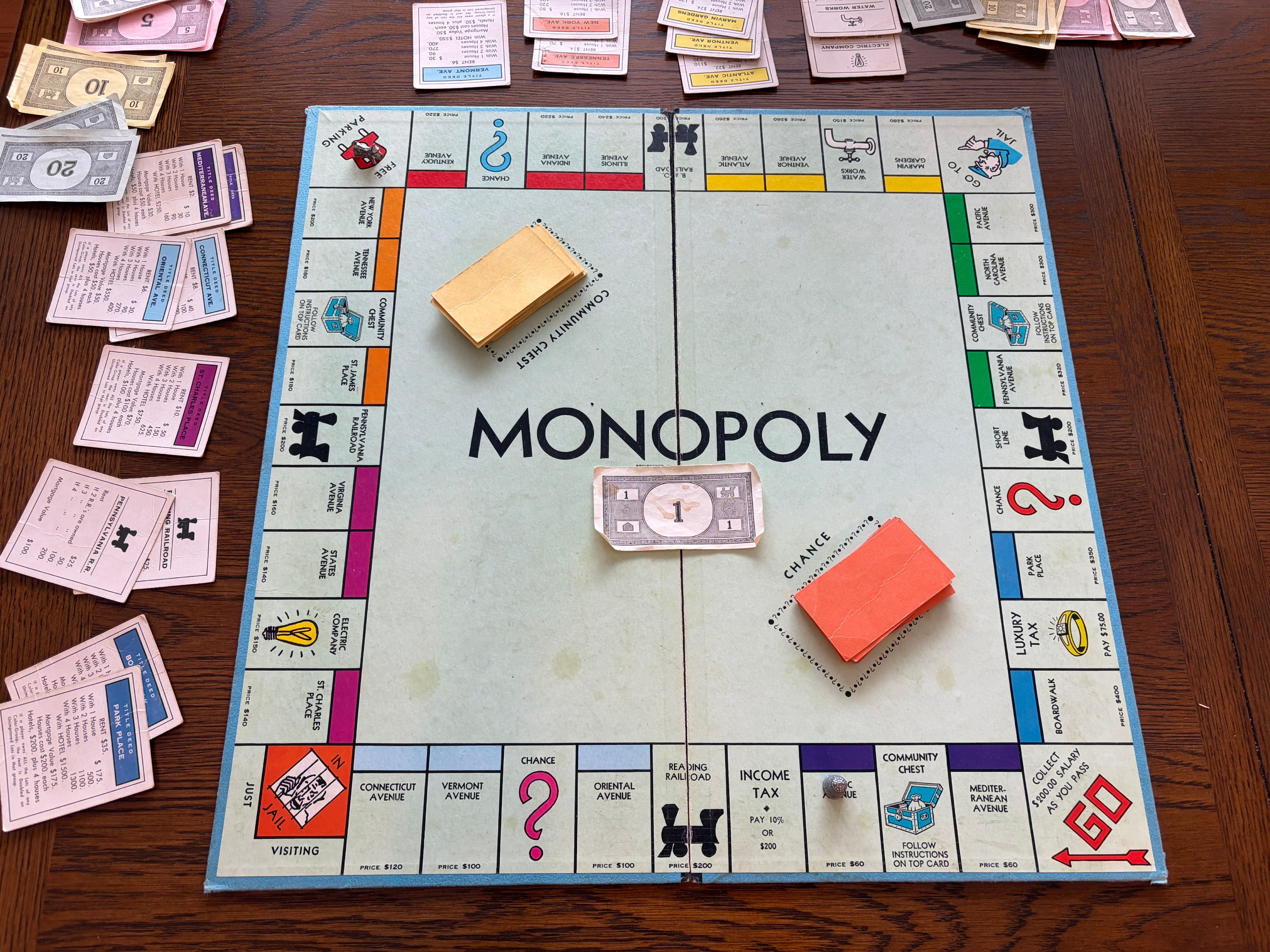
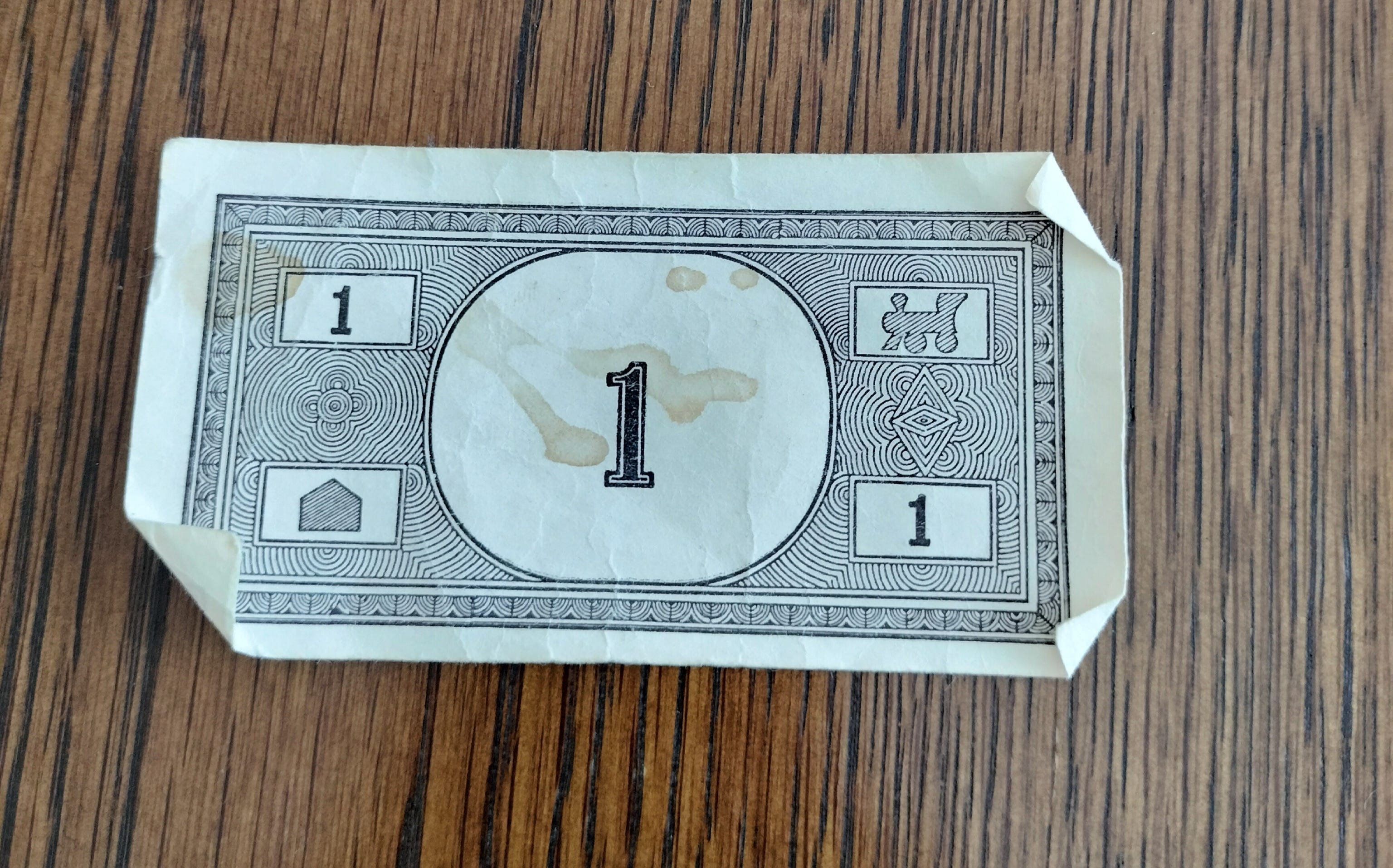
The Dirty Bill.
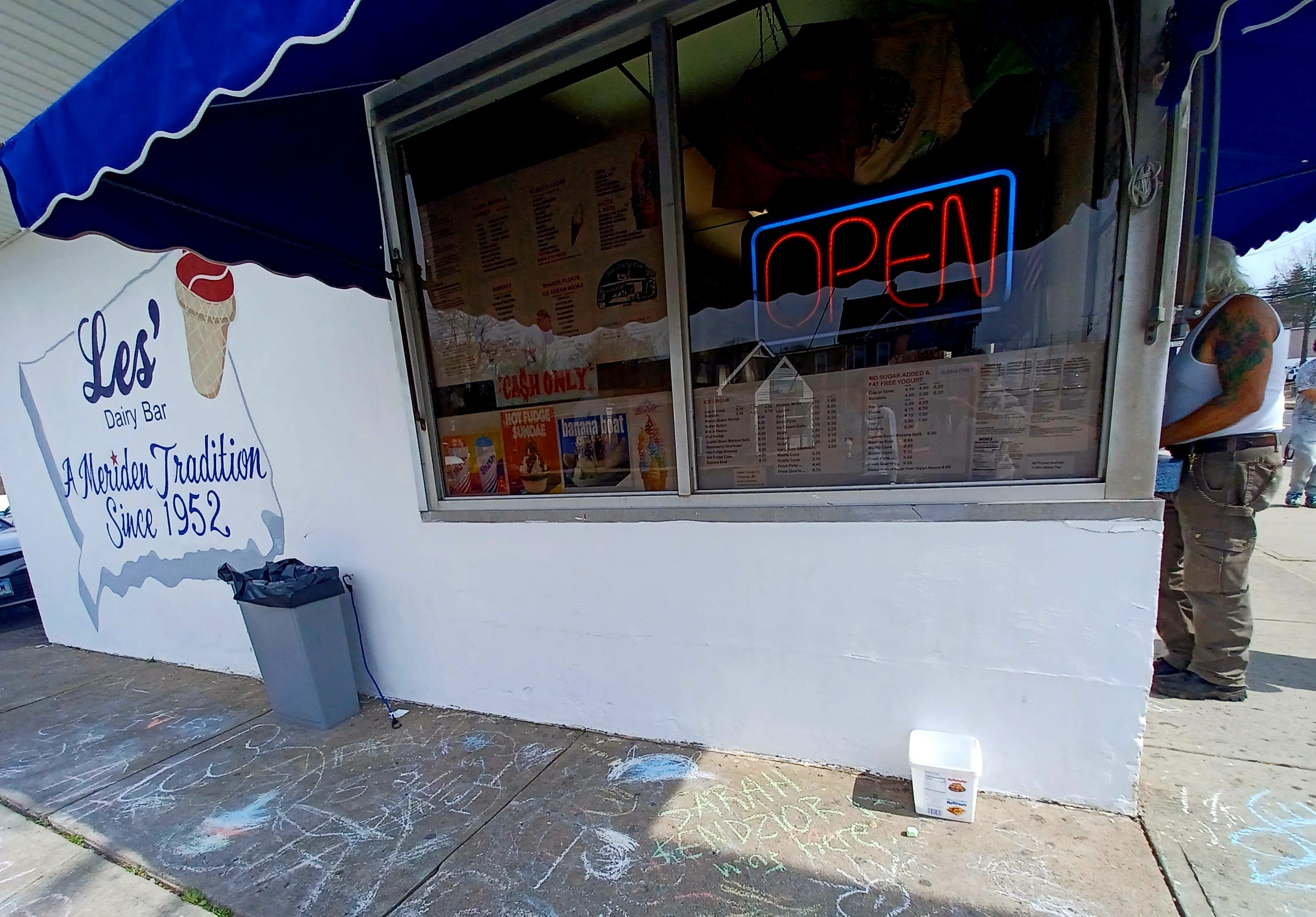
Les’, home to the best ice cream in the world and the origin story of the Dirty Bill. Look at the sidewalk for a secret message!
Sarah, amazes me how you can write about our scary world yet make me laugh and weep simultaneously. So grateful for you and your work.
I see that Tolstoy didn't monopolize great opening sentences! I always look forward to reading your work. Thank you.